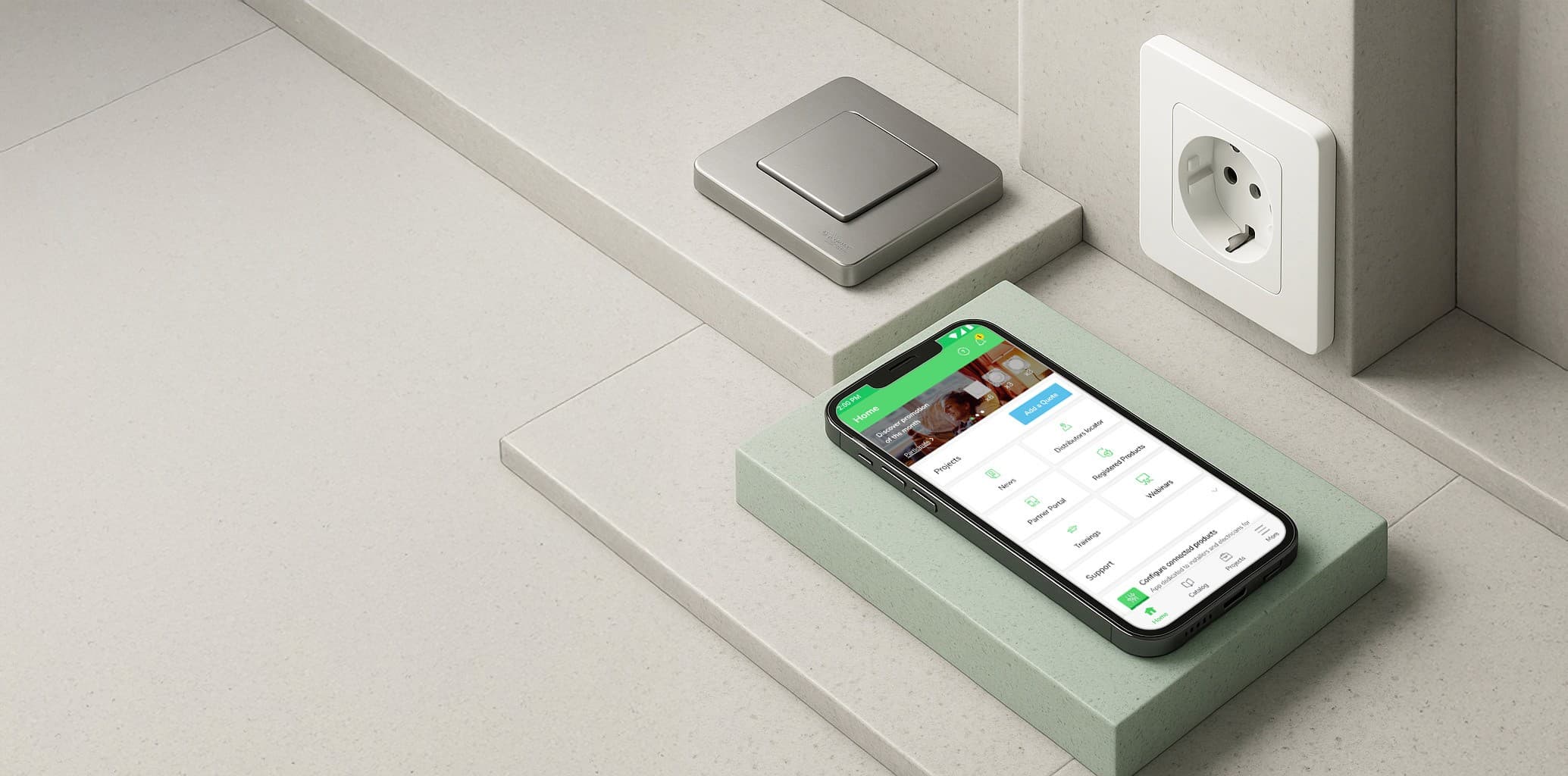
Schneider Electric
Turning a product catalog into an electrician's project tool
A basic product catalog reworked into a project tool for electricians across 187 countries
- Years
- 2020-2022
- Domains
- Electrical equipment
- Role & team
- Key designer
- 2 designers and 1 data analyst, brought in for the research rounds
- Activities
- User Research, UX Design, Process Transformation, Value Proposition Definition, Personalization Strategy
Reading time: 3 min
01 · Context
One of 300 apps, and not worth much to anyone
Schneider Electric had a mobile app primarily serving as a basic product catalog for electricians and distributors. It worked, but it was not worth much to users or to the business. The app was just one of over 300 separate applications Schneider maintained globally, creating fragmentation and maintenance challenges.
02 · Challenge
The brief was two words: improve the app
When I joined the project, Schneider Electric faced several critical issues:
- Lack of clear vision for the app's evolution
- Focus on solving small tactical issues rather than strategic needs
- Lack of personalization across 187 countries and 35+ languages
- Over 300 separate apps requiring support
- No consideration of user voice in decision-making
- Fragmented experience across multiple applications
My role was initially undefined beyond "improve the app," which presented both a challenge and an opportunity to shape the direction.
03 · Research, two rounds
41 in-person interviews across Spain, France, and Russia
Research Round 1: Foundational Insights
22
In-person interviews: Spain, France, Russia
My early findings argued for more than tactical fixes, so two more designers and a data analyst joined for this round:
- User journey mapping to understand workflow patterns
- Data & behavioral analytics to identify usage patterns
- User testing, click tests, and heatmaps to evaluate the current app experience
- Qualitative feedback analysis from existing users
The round focused on how electricians actually work. What we found:
- Work in small teams (1-4 people) on 2-5 projects simultaneously
- Rely heavily on Excel and specialized tools like Esabora and AutoCAD
- Value time efficiency above all else
- Navigate a fragmented ecosystem of digital tools
- Self-identify as problem-solvers and quality specialists
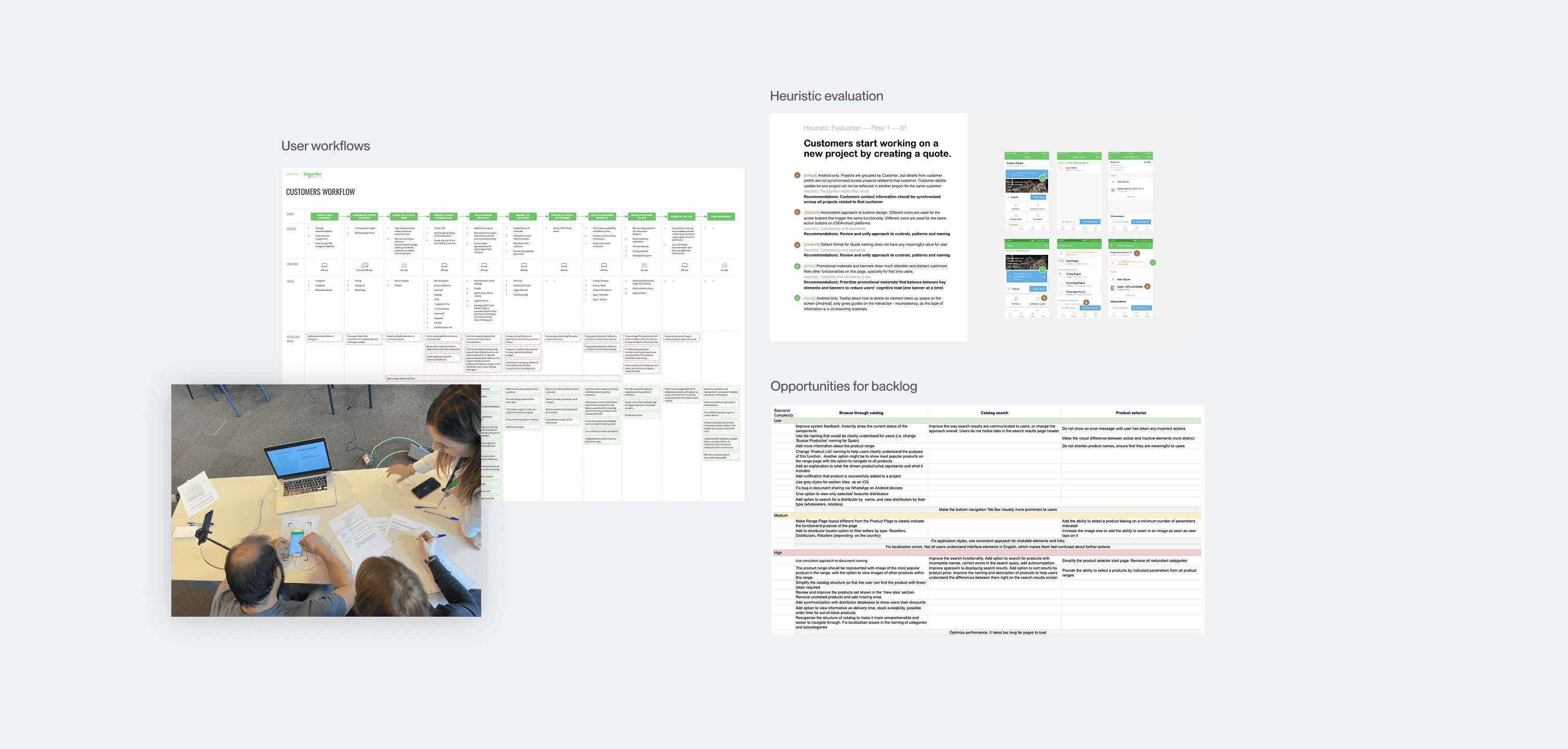
Research Round 2: Concept Validation & Strategy
19
In-person interviews: France, Russia
We used the first round to shape a second one, this time to test concepts rather than explore:
- Lean Canvas workshop to define business model
- Concept testing with prototypes in multiple languages
- Feature prioritization matrix to balance value and effort
- Value Proposition workshop to align on core offering
This phase tested the hypotheses and set the feature priorities. It also went deeper into the work itself:
- Lead generation primarily through recommendations and social media
- Quoting often happens in multiple stages
- Installation and maintenance involve team collaboration
- Project archiving relies on various cloud storage solutions
04 · Key insights
Electricians think in projects, not products
Across both rounds we sat with 41 electricians in Spain, France, and Russia. Four findings set the direction:
Project-centric mindset
Electricians think in terms of projects, not products. The app needed to reflect that mental model.
Fragmented tools
Users were juggling multiple digital tools, which created inefficiency and frustration.
Regional differences
Needs split by country. Invoicing was critical in France and not a priority in Russia.
Validated value proposition
“One app for the whole project experience” emerged as the core offering: quotation, panel design, documentation, collaboration, rewards, and learning.
05 · Transforming the process
The change I am most proud of is not in the app
The change I am most proud of is not in the app at all. It is in how Schneider decided what to build:
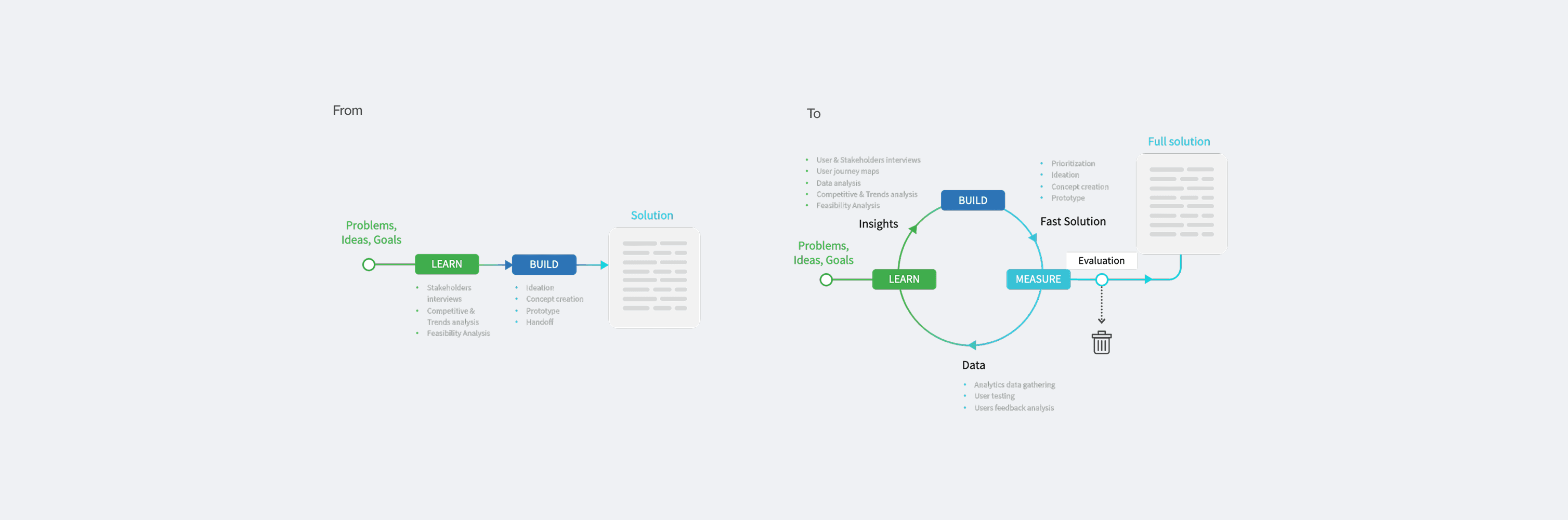
Getting there meant showing the client, round by round, what talking to electricians turned up that opinion in the room did not.
06 · Shaping the vision
From catalog to working tool, on three pillars
Out of the research I built a vision for the app, from catalog to working tool, on three pillars:
- Unified Experience: consolidate functionality from multiple apps into one cohesive platform.
- Personalized Experience: create country and role-specific experiences that show relevant content and features.
- Project Management: develop tools for managing electrical projects from estimation through completion.
07 · Solution
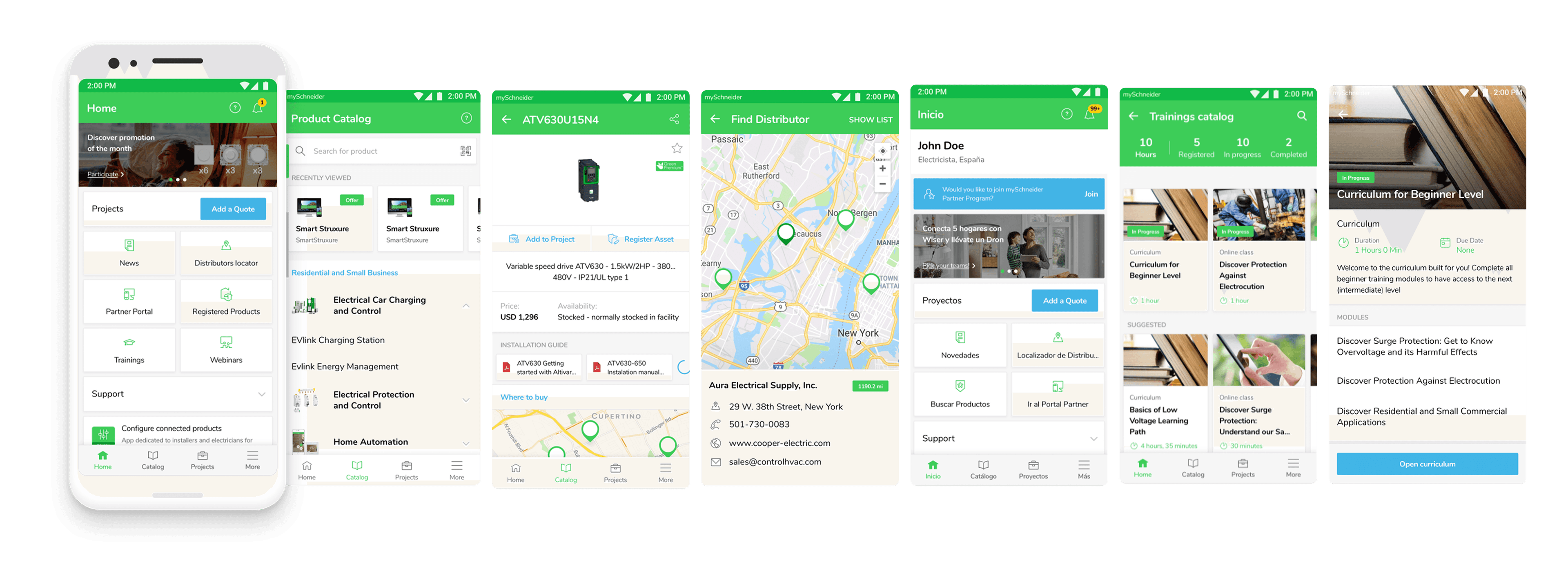
One app for the catalog, the projects, the training, and each market
Working closely with product and engineering teams, we delivered key improvements:
- Product catalog: separate PDF files per country → integrated digital catalog with technical documentation and FAQs.
- Project Management Tools: limited list of products → complete project management with estimation tools and information storage.
- Training Resources: webinars and tutorials only on the website → complete training catalog accessible within the app.
- Personalized Experience: one generic app for all markets → country and role-specific content and features.
08 · Impact and results
Over the year that followed, the numbers moved
Over the year that followed, the app's numbers moved:
- New users a year
- +194K
- Registered users
- +30K
- Monthly active users
- +33%
01
A data-driven process
Decisions moved from opinion in the room to evidence from research.
02
A defined value proposition
"One app for the whole project experience" became the thing the product was measured against.
03
A research-backed backlog
100+ improvement items, each traceable to something an electrician said.
04
300 apps down to 40
The vision for one consolidated app fed into the wider effort to cut the portfolio Schneider maintained.
05
Higher engagement
Country and role-specific content gave users a reason to come back to the app.
06
A foundation to build on
The research cycle, the value proposition, and the backlog all outlived the project I worked on.
09 · Conclusion
No longer a catalog with a search field
The app stopped being a catalog with a search field and became the place electricians plan a job. The part that outlasted the redesign is the process: Schneider now puts concepts in front of electricians before deciding what to build.
Redesigning the buying path to lift conversion from 20% to 23%